
Learning How to Suffer
One of the first articles I ever wrote and a reminder I still need today

Note: This was the first article I published on LinkedIn as my re-entry to writing in public again two years ago. Re-sharing here on Substack to document where it all began, and because it’s a reminder I needed as we kick off 2026 again.
The wave crashed down and took me with it, tumbling head over heels in what some would call, an oxygen-poor environment. The ocean didn’t seem particularly happy with me, deciding to punish my insolence by sending the surfboard into the back of my head... more than once. Thanks, Poseidon.

While not concussed, I did have salt water in every orifice of my head trying to clear me of any ideas of trying to stand up on the board again with the sinus cleanse no one asked for. And despite every sign telling me to pack it in for the morning, I took myself out into the ocean to try once more.
As a general rule, I hate not being good at things. Like really hate it. As a semi-competitive person (read: extremely competitive), I have often chosen not to play games I know I won’t win. Why play my brother in tennis when there’s not a snowball’s chance in hell I return a serve more than once? At that point, it’s like Nadal playing against a golden retriever who’s learned to hold a racket in its mouth. I’ve seen Air Bud (and he is a very good boy), but that would be a beat-down.
And yet, much of my experience over the past few years in jiu-jitsu, surfing, rock-climbing, and a few other areas tells me that deliberately choosing to expose ourselves to the things we are not good at is not only valuable but incredibly necessary. If we are to reach more of the best that we carry within us, we need the feedback from something that we still have more to learn.
For example, I’ve been doing jiu-jitsu for 1.5 years now. That belt is whiter than my pale skin, and that’s saying something. (Updated edit: I’m now a blue belt, and I’m still trash).
For the first 1.4 years of that, training consisted of me showing up to practice, getting the shit kicked out of me, going home sweaty and despondent asking myself “Why do I do this?”, and then coming back to do it over again. I rarely felt like I was making progress, and it was difficult sometimes to convince myself to even go to training. I skipped more than one session at the prospect of another beat-down.
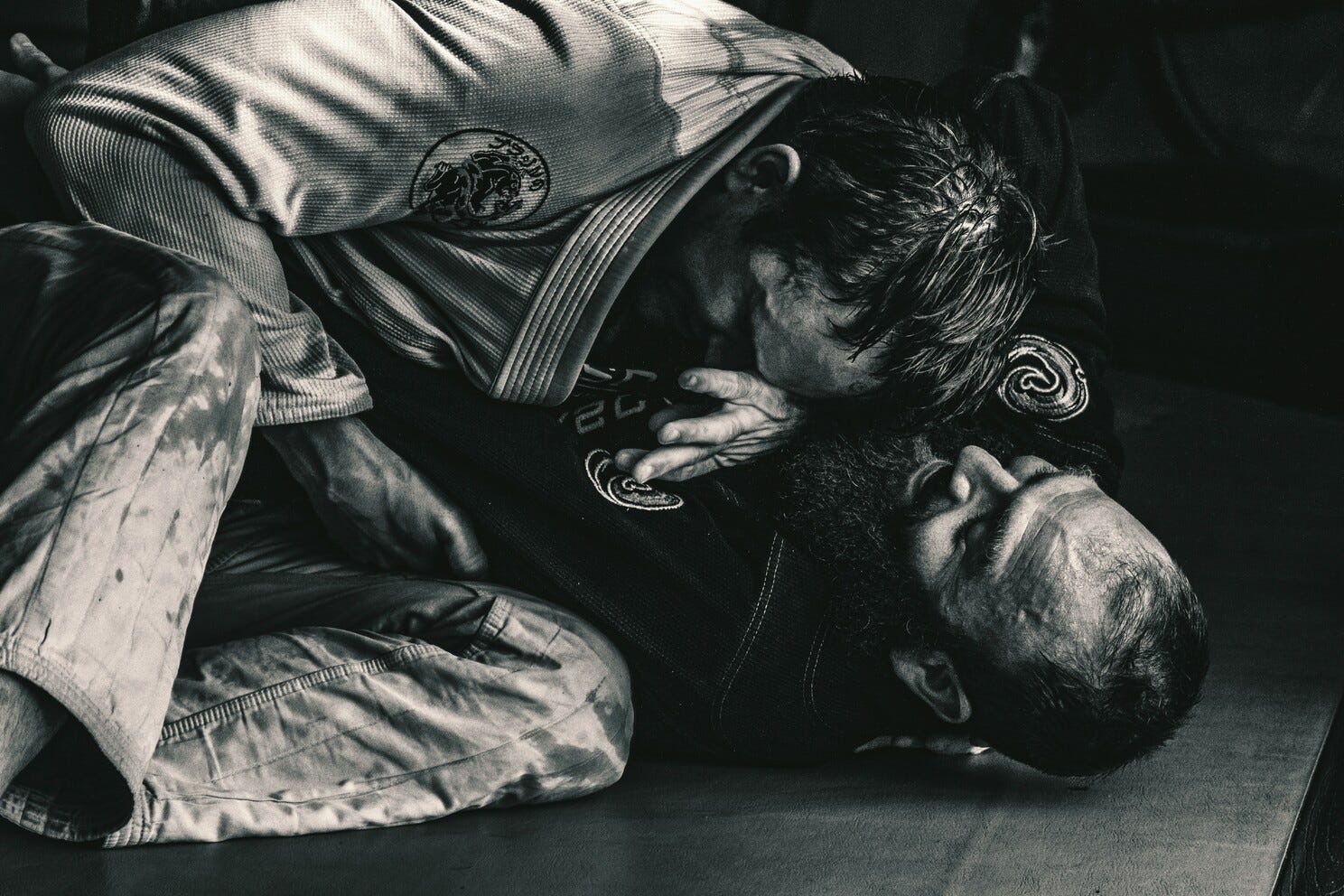
And yet, eventually, I trudged back. And eventually, I started to get better. I started to put the pieces together. I even started to not be smothered by people in their weird pajamas for the entire time we were rolling. Have you ever just breathed normally during practice? I highly recommend it.
So there was physical improvement in this one specific domain in my life, but what carried over to other arenas was more calm and more confidence. It’s hard to be upset about an email when someone has tried to snap your arm in half that morning, and it’s easier to feel good about yourself when you’ve done a hard thing. Even if you haven’t always ended up on top, you chose the challenge. Not many people do that.
It is easy to choose comfort. Your brain does not like pain in any form, real or imagined. There’s good reason for that; historically, pain has meant something is trying to harm you. Stabbing your hand with a knife has rarely led to an improvement in overall well-being.
This human tendency to avoid pain is also a crucial aspect of almost every story we ever tell. Author Donald Miller points out that:
“A general rule in creating stories is that characters don’t want to change. They must be forced to change. Nobody wakes up and starts chasing a bad guy or dismantling a bomb unless something forces them to do so. The bad guys just robbed your house and are running off with your last roll of toilet paper, or the bomb is strapped to your favorite cat. It’s that sort of thing that gets a character moving.
The rule exists in story because it’s a true thing about people. Humans are designed to seek comfort and order, and so if they have comfort and order, they tend to plant themselves, even if their comfort isn’t all that comfortable. And even if they secretly want for something better.”
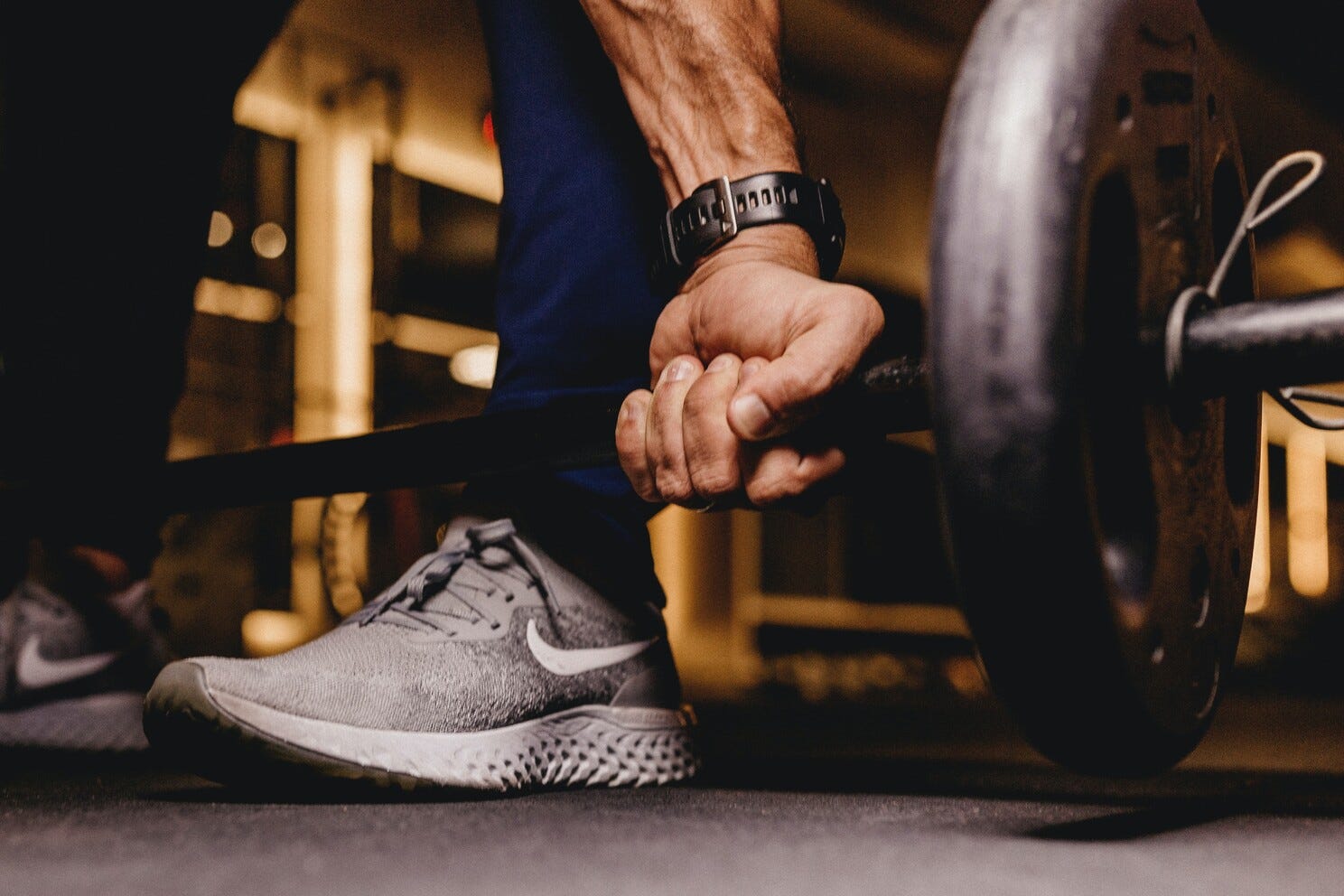
That’s why there is something particularly valuable about finishing a workout that you absolutely did not want to do. You dragged your feet. You moaned. You whined. You bitched. And you still dragged your ass to the gym, started, and finished. Sometimes you even showed up harder than you thought you could.
In today’s world, rarely is the pain we face of real, physical danger. Legitimate threats to your survival (big scary animals, bad weather, an angry God, an infestation of demons from hell) are harder to find in modern-day society. However, your brain is still looking for threats. And still finding them.
In most cases, the danger exists solely in our minds. Usually, the threat is something author Steven Pressfield would call “The Resistance’. It is fear that locks us in place, rather than a true need to survive. In contrast, when we choose to do the workout, or go to training, what feels good in that moment is a victory over your self, a win over the limiting stories in your brain that tried to tell you it is better to just stay here. When we choose to skip out on that pain, we miss a chance to put pain in perspective and to grow into something our brain never thought possible.
So if there is any message to receive here, it is to intentionally put yourself in challenging situations. Create deliberate opportunities for pain (or chaos, confusion, uncertainty) as that forges an opening for us to step outside our fragile conception of who we are and become something more. Enduring through a struggle we created helps us find better internal answers in the responses we choose and the meaning we assign to external hardship.
Short version: do hard shit.
Popular examples include (it doesn’t have to be physical):
Run a marathon (or a half, or a 5k).
Take a cold shower.
Do a 500 calorie workout (burning 500 calories).
Go to therapy.
Have a tough conversation with someone.
Publish something you wrote.
Meditate for time period you find uncomfortable.
Wake up early.
Whatever it looks like for you, find ways to throw yourself in the deep end*. When you’re there, look at what’s right in front of you (just one more step, just one more perfect stroke, just one more practice). You keep moving forward with a focus on the only thing you can do in that moment until you look up and don’t even recognize where you are or who you are anymore. All it took was pain, and it is always worth it.
(*I will take this time to say, please don’t hurt yourself. I’m not the kind of doctor that matters, so consider this a note to please do sensible things when it comes to your health).
I should be very clear about something: I am still not good at surfing. And I’m still not particularly good at jiu-jitsu either. Or rock-climbing. It will continue to take me a while before I approach anything resembling competence in those arenas. And yet, I will continue to go out into the waves, onto the mats, and up the walls, because who I am when I do those things is a better version of myself than the one who chooses to stay comfortable.
Where will you choose to suffer?
Such a well written article, Danny! We absolutely have to do hard things. There is very little downside to discomfort in the modern world. Somehow, our nervous hasn't still adapted to that and it still prevents people from fear and pain. We need to be in constant state of discomfort. That's when we learn and grow.
Good